

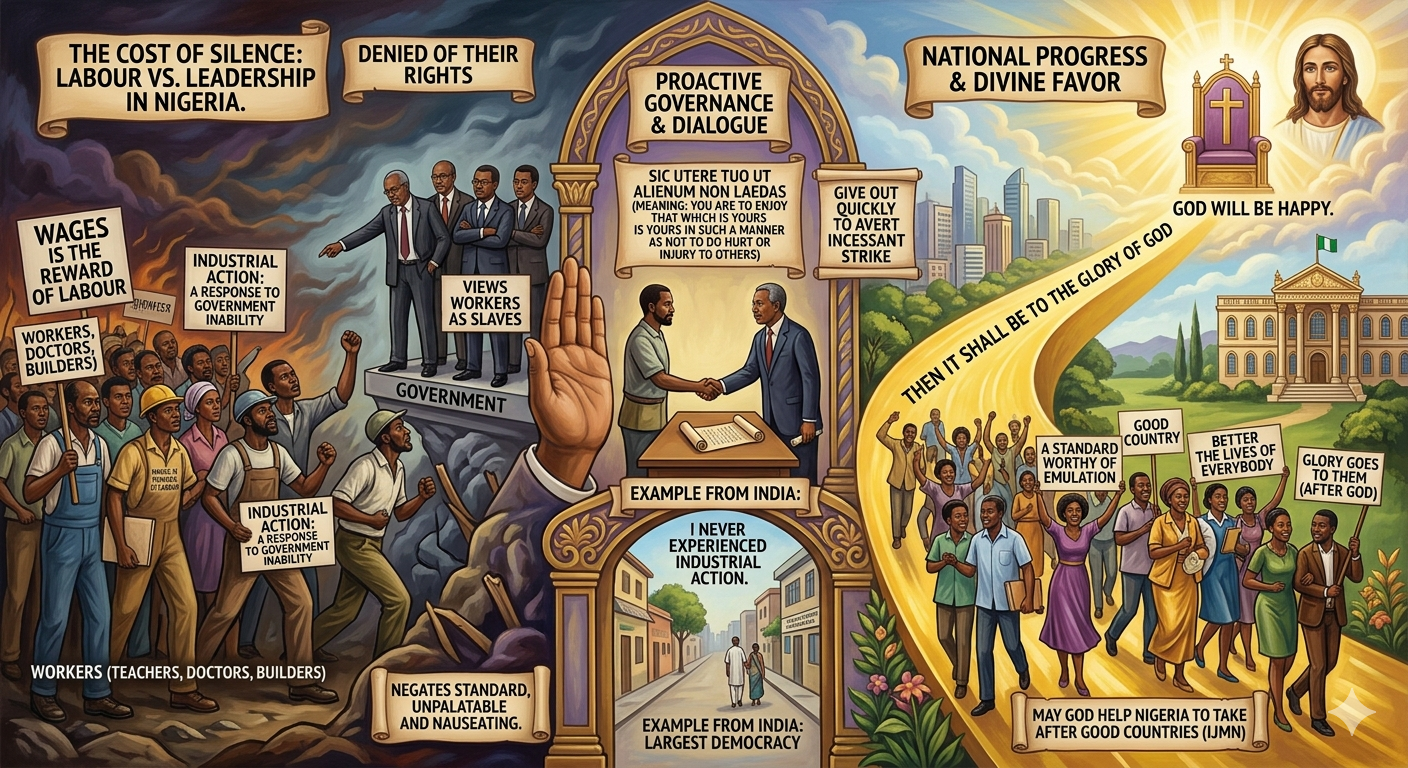

The Cost of Silence: Bridging the Gap Between Labour and Leadership
Industrial action is often viewed as a disruption, but in reality, it is a desperate response to a systemic failure. When a government fails to meet the basic standards of its workforce, a strike becomes the only language left to speak. In nations like Nigeria, where the relationship between the state and the worker often mirrors that of a master and a servant rather than a partnership, the fundamental right to fair wages is frequently treated as an afterthought.
The Illusion of Progress
The phrase “wages are the reward of labor” is a universal truth, yet it is one that many administrations pretend not to understand. In an egalitarian society, the term “industrial action” should ideally be non-existent. Why? Because a society built on equality and justice naturally meets the needs of its builders before they are forced to demand them.
When strikes become the “order of the day,” they destroy productivity and dismantle carefully laid targets. For a nation to have a standard worthy of emulation, it must first respect the hands that build its infrastructure, educate its children, and heal its sick.
A Lesson from the East: Sic Utere Tuo
Drawing from international experience, specifically in India—the world’s largest democracy—a different philosophy prevails:
“Sic utere tuo ut alienum non laedas” > (Use that which is yours in such a manner as not to injure others).
In a functional democracy, this legal maxim ensures that the government enjoys its power and resources without hurting the citizens it serves. In India, the culture of “giving out what is due quickly” helps avert the incessant strikes that plague other developing nations. When a government acts with speed and empathy, it establishes a standard that others want to follow, rather than one that feels “unpalatable and nauseating.”
A Call for Divine and Political Wisdom
The goal of highlighting these flaws is not to vilify a nation, but to advocate for a better life for every citizen. When a government prioritizes its workers, the glory ultimately returns to the leadership and, more importantly, brings pleasure to God.
To move forward, Nigeria and similar nations must:
- Abandon the ‘Slave’ Mentality: Workers are partners in progress, not subjects to be denied their rights.
- Proactive Governance: Meet requirements before they turn into grievances.
- Emulate Global Best Practices: Look to stable democracies where labor relations are handled with dignity and legal respect.
Prayer: May God help Nigeria and other nations to take after the examples of countries that value their people. If the government is good, the glory goes to them, and the nation prospers. In Jesus’ Mighty Name (IJMN), Amen.
Do you think the primary solution lies in stricter labor laws, or is it purely a matter of leadership’s political will?



